Most people associate sleep apnea with sleep clinics, CPAP machines, and overnight studies, not the person cleaning their teeth. But dentists are often the first providers to notice physical signs that something may be going on with your airway, sometimes years before a formal diagnosis is ever made.
One of the most common reactions I get when I bring up sleep apnea treatment during a dental visit is, "Wait, why is my dentist asking me about sleep?"
I have spent a significant portion of my career learning about the relationship between oral health and airway function. It is something I am passionate about, and it is one of the reasons I pursued training through the American Academy of Dental Sleep Medicine. At Link Dental, sleep apnea screening is not a side note. It is built into how we evaluate every patient.
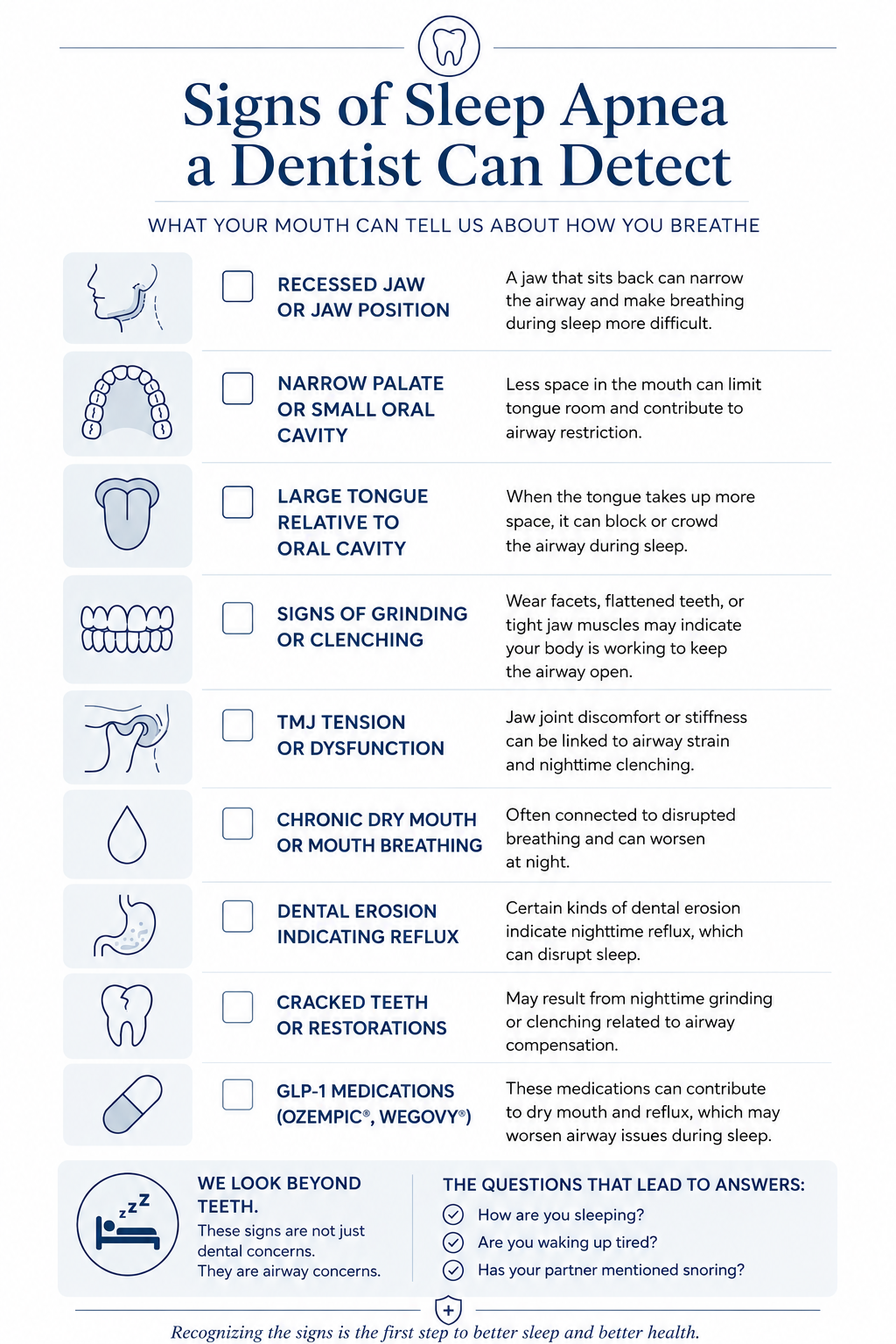
During a routine dental exam, I am already looking at structures that directly influence your airway: your jaw position, your bite alignment, the size of your tongue relative to your oral cavity, signs of wear from grinding or clenching, and the condition of your temporomandibular joint.
For example, a patient who grinds their teeth at night may be doing so because their body is trying to reposition the jaw to keep the airway open. A narrow palate or a recessed lower jaw can physically restrict airflow during sleep. Chronic dry mouth, teeth affected by acid reflux, and even cracked teeth can all be connected to disrupted breathing patterns overnight.
If you are on a GLP-1 medication like Ozempic or Wegovy, it is worth knowing that those drugs can contribute to dry mouth and reflux in ways that compound airway issues during sleep, something I wrote about in more detail in this post on Ozempic Mouth.
One patient I think about often came in for a routine crown. Textbook dental visit. But I noticed significant wear on her back teeth, a slightly recessed jaw, and scalloping along the edges of her tongue. These are classic signs that her airway was working overtime at night. She had no idea. Her husband had mentioned the snoring, but she had chalked it up to allergies for years. We got her evaluated, she was diagnosed with moderate obstructive sleep apnea, and she is now sleeping through the night for the first time in probably a decade. That is the kind of outcome that keeps me invested in this work.
When I see these signs together, I do not just treat the symptoms. I ask the questions that can lead to real answers: How are you sleeping? Are you waking up tired? Has your partner mentioned snoring?
Our Role
Here is something worth being clear about: I do not diagnose sleep apnea. That is a medical diagnosis, and it requires a sleep study conducted by or in coordination with a sleep physician. What I can do is recognize the oral and structural indicators that suggest a patient may be at risk, and then guide them toward appropriate testing.
This is where collaboration matters. I work closely with sleep physicians and medical providers. When I identify potential risk factors, I can help facilitate a referral for a sleep study, explain what to expect, and stay involved throughout the process. If a diagnosis is confirmed and oral appliance therapy is appropriate, I am the one who designs and fits the custom device.
It is a partnership. The sleep physician handles the diagnosis. I handle the treatment. And the patient gets a coordinated experience.
Treatment Options
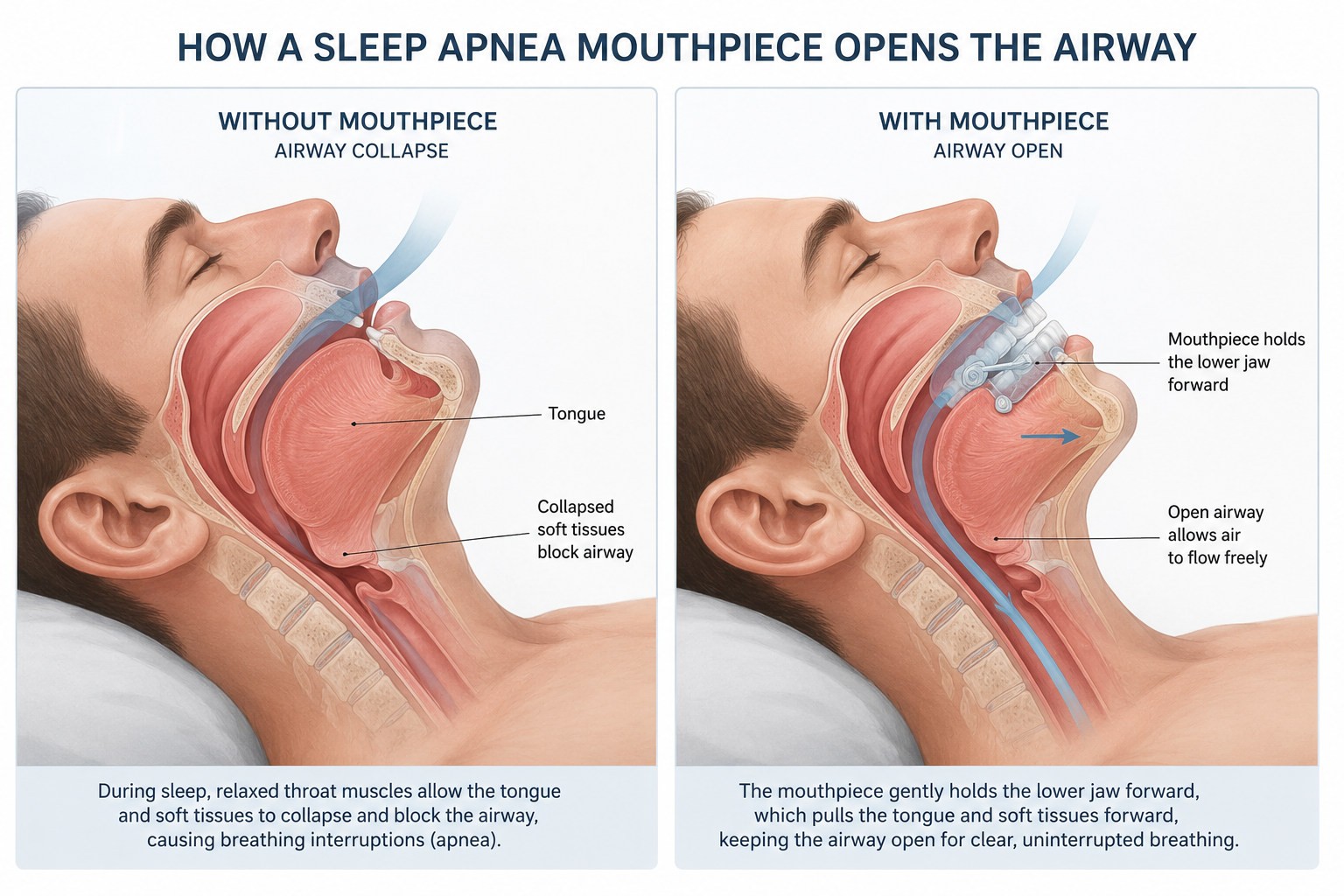
For patients with mild to moderate obstructive sleep apnea, or those who cannot tolerate CPAP, a custom oral appliance can be a practical, comfortable solution. The device is worn during sleep and gently repositions the lower jaw to help keep the airway open.
Here is what I tell patients who ask about it:
I will be upfront: oral appliances are not right for everyone, and I would rather tell you that clearly than overpromise. Severe sleep apnea typically still needs CPAP, and there are cases where a combination of both is the right answer. But when a patient is a good candidate? The change can be dramatic: better sleep, less fatigue, no more waking up with a headache. The difference in energy and overall well-being is something I hear about at nearly every follow-up visit.
May Need Another Approach
Next Steps
One of the things I want people to take away from this is that you do not need to walk into my office with a confirmed sleep apnea diagnosis for us to help. If you are tired all the time, if your partner says you snore, if you wake up with headaches or jaw pain, those are reasons enough to bring it up at your next visit.
I see patients every day who had no idea their dentist could play a role in their sleep health. Once they learn what we look for and how we can help, the conversation shifts from "I did not know" to "I wish I had known sooner."
If that sounds like you, I would welcome the chance to talk about it.
Schedule a visit and we will take a closer look at what your mouth may be telling us about how you breathe.